|
SALVADOR
DALI'S SYMBOLISM
Melting
clocks
The famous melting clocks represent the omnipresence of time, and
identify its mastery over human beings. The inspiration for this
concept came from a dream of runny Camembert one hot august afternoon.
These symbols represent a metaphysical image of time devouring itself
and everything else.
Crutches
The crutch is one of Dali’s most important images and features
in many of his works. It is first and foremost a symbol of reality
and an anchor in the ground of the real world, providing spiritual
and physical support for inadequacy in life. The crutch is also
the symbol of tradition, upholding essential human values.
Drawers
The drawers arise from their Freudian explanation as a representation
of the concealed sexuality of women. Dali portrays many of the drawers
to be slightly ajar, indicating that their secrets are known and
no longer to be feared.
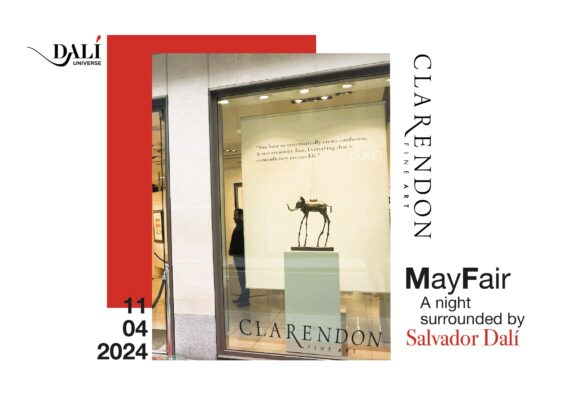
Elephants
Dali’s elephants are usually depicted with long, multi-jointed,
almost invisible legs of desire, and carrying objects on their backs,
which are also full of symbolism. These elephants represent the
future and are also a symbol of strength. They are often shown carrying
obelisks, which are symbols of power and domination, and not without
phallic overtones. The weight supported by the animals spindly legs
shows weightlessness, only made more significant by the burden on
their backs.
Snails
The snail occupies an important place in the Dalinian universe as
it is intimately linked to a significant event in Dali’s life
– his meeting with Sigmund Freud. As Dali believed that nothing
occurred to him simply by accident, he was captivated when he saw
a snail on a bicycle outside Freud’s house. He connected the
snail with a human head, more particularly Freud’s head. As
with the egg and lobster, the hard shells and soft interiors of
snails also fascinated Dali, and their geometry of their curves
enchanted him.
Eggs
The egg is another favourite Dalinian motif, given the duality of
its hard exterior and soft interior. Dali links the egg to pre-natal
images and the intra-uterine universe, and thus it is a symbol of
both hope and love.
Ants
When Dali was five years old, he saw an insect that had been eaten
by ants and of which nothing remained except the shell. The swarming
ants in Dali’s pictures and sculptures are references to death
and decay, and are reminders of human mortality and impermanence.
They are also said to represent overwhelming sexual desire.
Grasshoppers
Dali had an irrational fear of grasshoppers, stemming from his childhood
torment by other children, who often threw grasshoppers and other
insects at him. When they appear in Dali’s work, grasshoppers
are used as a symbol of destruction, waste and fear. Dali represents
them with a fearful nature, as large and intimidating in comparison
to the other figures, and they are often shown in the act of eating
the main subject of the work.
FOR ENQUIRIES about school group visits
or to request a full education pack
and booking form, please contact us on 020 7450 7617 or email us
on groups@countyhallgallery.com.
|